
INEC and Unending Conspiracy Theories

24th February 2020

On 6th February 2020, the Independent National Electoral Commission (INEC) announced the de-registration of 74 political parties. The Commission’s Chairman, Prof Mahmood Yakubu at a media briefing held in Abuja, attributed the action to the Fourth Alteration of the 1999 Constitution of the Federal Republic of Nigeria (as amended).

Specifically, Section 225A empowered INEC to deregister a political party on the following grounds: breach of the requirements for registration as a political party; failure to win at least 25 percent of the votes cast in one state of the federation in a Presidential election; 25 percent of the votes cast in one local government area of a state in a Governorship election; at least one ward in a Chairmanship election; one seat in the National or State Assembly election or one seat in a Councillorship election.

Before implementing this law, the Commission carried out an assessment of all the 92 registered political parties last December, using the just concluded 2019 General Elections and the Federal Capital Territory (FCT) Area Council Elections to determine the level of compliance. Let’s be reminded that INEC is only empowered to conduct local government elections in the FCT and good enough, the last FCT area council polls coincided with the 2019 general elections. Each State has its electoral commission, known as the State Independent Electoral Commission (SIEC) which conducts local government elections, although, INEC makes the National Register of Voters and list of registered political parties available to them when local government elections are conducted.

After the assessment, 16 political parties fulfilled the requirements stipulated under Section 225A while 75 political parties failed. However, one political party filed a suit in court and obtained an order restraining the Commission from de-registering it, therefore, the Commission could not take further action until the determination of the case. Another political party registered by court after the 2019 general elections could also not be de-registered since it was not among those assessed during the period. These two, plus the 16 political parties that initially scaled the hurdle, bring the total number of registered political parties in Nigeria today to 18.

This is not the first time that INEC had deregistered political parties. Between 2011 and 2013, the Commission deregistered 39 political parties, relying on Section 78 (7a) of the Electoral Act 2010 (as amended). But some political parties challenged the Commission’s action at the time, insisting that the Electoral Act was inferior to the Constitution. The courts agreed with the political parties and ordered INEC to reinstate them. The Commission complied.

Just as some political parties had challenged the Commission’s action at that time, an ample opportunity exists for any political party that disagrees with the latest move to also test the matter in court. Unfortunately, since the announcement was made, some of the deregistered parties even after filing their case in court have also embarked on unwarranted mudslinging, talking anyhow and making outrageous claims. The other day, the National Chairman of one of the deregistered parties on national television said INEC “does not have the power to deregister political parties”. He was wrong and he knew it.

Contrary to the familiar conspiracy theories usually fabricated by aggrieved politicians each time INEC acts within its powers, the Commission did not make the Fourth Alteration of the 1999 Constitution. The Legislators did and it is within their powers to do so. What the Commission was expected to do and simply did was to give effect to the constitutional amendment, based on the parameters prescribed by the same Constitution. Therefore, it will amount to an act of ignorance for anyone to say that INEC acted unconstitutionally.

Again, a Presidential candidate of one of the deregistered parties recently made an unbelievable allegation – a fat lie – that the results of the 2019 general elections on which the commission based its assessment “have not been officially released anywhere.” Shocking! The results have, of course, been on the INEC website (https://www.inecnigeria.org/elections/election-results/) since March 2019. They are displayed under five icons: 2019 Presidential Election, 2019 Governorship Election, 2019 Senatorial District Elections, 2019 House of Representatives Elections and 2019 House of Assembly Elections. In fact, his political party scored 4,340 votes in the Presidential election.

In any case, the results were known at every segment of the general elections (Presidential, Governorship, National, State Assembly and FCT Area Council) even before they were officially announced, courtesy of an innovation introduced by the current Commission to engender transparency in the electoral process – the People’s Result Sheet, also known as Form EC60E – which is pasted at every polling unit after an election. This innovation was introduced during the Anambra state governorship election held in November 2017. Agents of political parties are expected to attest to the results released at the polling unit level before they are entered into Form EC60E and then pasted at a conspicuous place for all to see. Indeed, Nigerians knew the winner of the 2017 Anambra governorship election even before INEC officially announced it, by simply doing the arithmetic of all polling units’ results in the state’s 27 local government areas.

It is also not true, as conspiracy theorists have often claimed, that the 2019 General Elections were “discredited by every external and most local Observers and the international community.” A total of 335 Observer Groups, comprising 293 Domestic and 42 Foreign, applied for accreditation to observe the 2019 General Elections. The Commission accredited 159 Observer Groups (120 Domestic and 39 Foreign). All of them, put together, deployed 73,562 Observers (71,256 Domestic and 2,306 Foreign). Out of these, only 42 domestic observer groups submitted reports on the election to the Commission. In all the reports submitted by both Domestic and Foreign Observer Groups, there is nowhere that any of them expressly condemned or discredited the 2019 general elections. Of course, they individually drew attention to certain irregularities and weaknesses that they noticed in some of the places they deployed to, but they also commended the Commission’s efforts in several other areas.

To be sure, there was no single Observer Group with the capacity or personnel to deploy to all the 119, 973 polling units and over 50,000 Voting Points across the country where the elections took place. The point to note here is that each group could only report on what transpired at the location(s) where its members were privileged to cover. It is therefore an exercise in futility for embittered politicians and their collaborating pseudo civil society organisations to rehash lies about what transpired during the 2019 general elections. Nevertheless, the Commission takes the observer reports seriously and will continue to make use of their implementable recommendations for the improvement of the electoral system.

As for the credibility of the 2019 general elections, INEC believes, without any doubt, that the elections were free, fair and credible but not perfect. The beauty of it all is that all aggrieved persons had the opportunity to challenge the outcomes. And they did. A total of 807 post-election petitions were filed in the courts. Out of this figure, 582 were dismissed and 183 were withdrawn by the petitioners. Only 30 re-run elections were ordered by the courts, while INEC was also instructed to issue 12 Certificates of Return to persons other than those earlier declared as winners. The last set of rerun elections were concluded on 25th January this year, bringing the 2019 general election cycle to a close.

Interestingly, some of the politicians currently bad-mouthing INEC and trying to discredit the last general elections did not take this route until the deregistration. And in doing so, they are distorting facts, throwing up wild allegations and even questioning the Commission’s legitimacy. It looks like some political parties simply want to dictate what the Commission should or should not do. This is laughable. Political parties cannot tell INEC, the regulator, how the rules of the game should be applied. It is not in their place to do so. Their obligation is to respectfully comply with all the rules set by the Commission.

Rather than engage in a campaign of calumny against INEC, I will advise the deregistered political parties to seize the moment, engage with the National Assembly constructively and present robust arguments backed by empirical facts – if they have any – to change things. The courts cannot solve every problem.

Going forward, with the Fourth Alteration of the 1999 Constitution now in force, all political parties in Nigeria will be assessed after every general election and any party that fails to meet the threshold under Section 225A will face the prospects of de-registration, unless the Constitution is amended again.

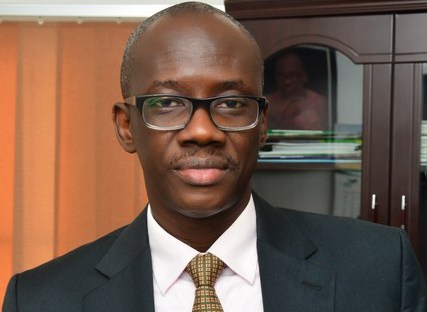
Oyekanmi is the Chief Press Secretary to INEC Chairman.
Between Perception and Reality

March 6 2019

The opportunity to serve in my current capacity at the Independent National Electoral Commission (INEC) has opened my eyes to many underlying factors that shape the conduct of elections in a way I would never have imagined from the outside. From my privileged position, I could not but appreciate the enormous challenges faced by the INEC Chairman, Prof. Mahmood Yakubu, the National Commissioners and other hardworking staff members of the Commission, as they planned for and conducted each of the 195 elections that the Commission has so far conducted since the 2015 polls.

Organizing elections in Nigeria, just like practising journalism is a thankless job. Yet, for all the tremendous work that they do at INEC, Prof Yakubu and his team are more often than not derided by mostly ignorant individuals and those who, ironically, are at the fore-front of deliberately complicating the Commission’s work. Despite all the barrage of insults that have been thrown in his direction since he took the job in November 2015, the INEC Chairman has consistently, to my amazement, maintained his cool – a virtue and gift which I must confess that I don’t have. Some of us are simply wired in a totally different way.  A few times that I had prepared rejoinders to what I considered as nonsensical articles, Prof Yakubu had stopped me on each occasion, jokingly telling me that I was too emotional, but I don’t think so. Nevertheless, I have been appalled by some of the narratives I have read in some newspapers and on some social media platforms about him – tons of uninformed, visibly biased articles written by columnists of questionable character and supposedly senior journalists – containing distorted facts and outright lies. Unfortunately, some Nigerians believe these narratives, now popularly referred to as “fake news” and waste no time in sharing them.

I can understand when familiar forces – who like to refer to themselves as members of the Civil Society confraternity, commissioned Public Relations strategists, copy and paste “citizen journalists” and pseudo human rights activists engage in what they are famous for in every general election cycle.  But my worry is the realization that some reputable mainstream media organisations are also joining the fray. Thankfully, a number of media establishments have remained committed to the truth and the creed. They acknowledged it when INEC performed well and criticized it objectively when it faltered. Constructive criticism is healthy and acceptable. Yet, the sacred ethics of our journalism profession do not permit an intentional distortion of facts, foul language and character assassination in the brazen manner that I have seen in some newspapers, on social media platforms, and aired on radio and television. Yet, this INEC that they find pleasure in attacking unjustifiably belongs to all Nigerians. It is not anybody’s property. The Chairman and National Commissioners are holding their respective positions on trust and they all have a fixed term. Even the civil servants must leave at some point – either when they attain the age of 60 years old or 35 years in service, whichever comes first.  But INEC as an institution will remain.

There is no perfect election anywhere in the world. Not even in the United States, whose Presidential system Nigeria has copied – as the events that followed the last Presidential election which brought President Donald Trump to power have revealed. The allegations of Russia’s interference in that election have simply refused to go away. Estonia, which has embraced electronic voting has had to endure several cyber attacks allegedly from Russia, forcing it to team up with several European allies to deal with the problem.

Look at the last general elections held in Kenya on 8th August of last year, in which technology was fully applied and expected to perform some magic. President Uhuru Kenyatta emerged victorious in that election but the opposition leader, Raila Odinga successfully challenged the outcome at the country’s Supreme Court and got it overturned. Odinga never trusted the Independent Electoral and Boundaries Commission (IEBC) of Kenya from the outset and had made some allegations against it long before the polls.

The general elections held in Liberia on 10th October 2017 also presented some interesting scenarios. No candidate won a majority in the first round, necessitating a run-off between the two leading candidates – George Weah and Joseph Boakai. However, Charles Brumskine who came third, challenged the results of the election in court because he felt it was marred by irregularities that pushed him to the third position. He lost.

Let’s go to Venezuela where the controversy that trailed the Presidential election held on 20th May 2018 is still festering and threatening to tear the country apart. Although, the results showed that the incumbent, Nicolas Maduro won, but the two leading candidates, Henri Falcon and Javier Bertucci have rejected those results. I could go on and on.

In the three instances mentioned above, lack of trust in the Election Management Bodies in the respective countries is the clear denominator, as is the case in Nigeria, for every election conducted since 1999. In Nigeria’s case, the do-or-die politics and winner-take-all attitude of the politicians make matters worse. In this clime, politicians don’t contest in an election with the understanding that they could lose. To them, they simply cannot lose. When a Nigerian politician wins an election, INEC will be described as “credible, dependable and fair.” But when the same politician loses, the Commission will be referred to as “fraudulent, unfair and deceitful.”

I am a witness to the sheer amount of energy that Prof.Yakubu and his team have invested in preparing for the 2019 General Elections. For those who know him like I do, his thoroughness and attention to details can, sometimes, be tasking. But his insistence on doing the right thing at all times is the virtue that I personally admire the most about him, not just at INEC but at the Tertiary Education Trust Fund (TETFUND) where he had served before becoming the Chairman of INEC.

Many Nigerians are oblivious of what it really takes to organize a general election in a vast country like Nigeria and deliver election materials to all the 36 states and 774 local government areas. There are 119, 973 Polling Units all over the country, 8,809 wards, over 84 million registered voters, 91 registered political parties and 23,316 candidates participating in the general elections. For the six elections taking place this year – Presidential, Senatorial, House of Representatives, Governorship (in 29 states), State Assemblies and the Federal Capital Territory Area Councils, a whooping 421.7 million ballot papers had to printed, in addition to 13.6 million result forms for the Presidential election alone. Some 180,000 Smart Card Readers (SCRs) were also deployed, besides thousands of ballot boxes and voting cubicles.

In order to deliver election materials to all the local government areas, INEC had to sign a Memorandum of Understanding (MoU) with transport unions, enlist the Nigerian Air Force and request for the services of other aircraft companies. INEC does not own a single aircraft, yet it had to airlift the heavy consignments to the five zonal airports hubs – Abuja (for North Central), Port Harcourt (South-South and South East), Kano (North West), Maiduguri and Yola (North East) and Lagos (South West). Unfortunately, bad weather forced a slowdown of its efforts to deliver materials as scheduled, forcing the postponement the nation witnessed on 16th February.

I have heard critics say that INEC had four years to prepare, therefore it should have no excuse. But it is not as easy as it seems. Take for instance the 640 court cases arising from the nomination of candidates alone, in which INEC was joined. As at 16th February, INEC had received 40 different court orders on whether to add or drop candidates. The implication? There is usually a window of 30 days for the Commission to print ballot papers and result sheets and ship them to all the Polling Units in the country. One month. Then, arsonists set fire to the Commission’s offices in Awka, Anambra state, Isiala Ngwa in Abia state, and Qu’an Pam local government office in Plateau state days to the opening of polls.

In Akwa, over 4,600 Smart Card Readers (SCRs), which take an average of six months to procure were destroyed. In Abia, hundreds of Permanent Voters’ Cards (PVCs) were burnt and in Plateau, printed register of voters, ballot boxes, voting cubicles and many electrical generating sets were also lost. These are monumental losses.

Let me digress a little bit. If it was that easy to organise logistics, why is it that no national newspaper in this country has been able to circulate in each of the 36 states of the federation and the FCT by 8am every morning? I remember the last time I visited Yola,  Adamawa state, the “latest” newspapers I could get from the vendors were two days old.

The Presidential and National Assembly elections have come and gone. A winner has been declared and the Commission is now focused on the Governorship, State Assembly, the FCT Area Council elections and the supplementary National Assembly elections that could not be conducted on 23rd February due to violence and other infractions, that are all slated for 9th March. Although the February 23rd elections were not perfect, the Commission undoubtedly gave a good account of itself. Sadly, some ad-hoc and permanent staff and Resident Electoral Commissioners suffered one form of harm or the other. The Commission lost Mrs. Ibisiki Amachree, an ad-hoc staff who was killed by stray bullets in Rivers State, while some were raped. Some Nigerians were also killed by mindless human beings. Members of the National Youth Service Corps (NYSC) form the bulk of the Commission’s ad-hoc staff. The Commission will find it difficult to conduct elections without them.

Yet, the familiar forces who find it convenient to castigate the Commission only for its shortcomings do not see any need to show some empathy for the victims who lost their precious lives and their families; those who were raped and even some of the Commission’s Resident Electoral Commissioners whose lives were endangered for insisting on the right thing. All they are interested in is are the results of the elections.

It is in everybody’s interest that INEC succeeds in carrying out its mandate at all times. It is also the responsibility of every Nigerian to support the Commission to achieve its goals. For If INEC fails, God forbid, we will all pay a very high price.

Oyekanmi is the Chief Press Secretary to INEC Chairman.